
How to Choose a Furnace in Edmonton
The short answer: there is no best furnace, only the right furnace for your house.
That sounds like a dodge, so here is what it means in practice. Two houses on the same street, built thirty years apart, need different equipment. The brochure numbers that look like the decision, efficiency and brand, matter less than three things nobody puts on a brochure: how much heat your house actually loses, what your ductwork can move, and where the exhaust can go. Get those right and a mid-range furnace will run quietly for twenty years. Get them wrong and the most expensive model on the market will short cycle, leave the back bedroom cold, and wear itself out early.
This is the order we work through it in, and the questions worth asking whoever ends up quoting you.
Size, and why bigger is worse
Heating equipment is sized against the coldest conditions a place plans for, and Edmonton plans for a lot colder than most of the country. That is why a furnace specified somewhere milder does not simply transfer here, and why the honest answer to "what size do I need" is a measurement rather than a rule of thumb.
A heat loss calculation looks at the floor area, the ceiling heights, the windows, the insulation, and how leaky the house is, and comes out with the heat the house gives up on the coldest night. The furnace is matched to that.
What happens when the furnace is too big is counterintuitive enough that it is worth spelling out. An oversized furnace heats the air near the thermostat quickly and shuts off. A few minutes later it starts again. That cycle repeats all day, and it costs you three ways. The ignition and blower components do far more starts than they were built for. The rooms at the end of the duct run never warm up, because the blower stops before the heat gets there. And the fast blasts of hot air feel drafty rather than comfortable.
Oversizing is common because quoting from the old furnace is fast, and the old furnace was often oversized too. If a quote arrives without anyone measuring the house, that is the question to ask.
What the AFUE number buys you
AFUE is the share of the gas you pay for that becomes heat in the house across a heating season. A 96% furnace turns 96 cents of every gas dollar into heat. The mid-efficiency units still running in plenty of Edmonton basements sit closer to 80%, so roughly a fifth of the gas goes up the chimney. Over a heating season that lasts from October to April, that gap is the clearest argument for the upgrade.
We install high-efficiency Armstrong Air furnaces, with models reaching up to 97% AFUE. Two honest caveats on the number itself. It is a seasonal average measured under test conditions, so it compares models well and predicts your specific bill poorly. And the saving only materialises if the furnace is sized and the ductwork is right, because an oversized 97% furnace cycling all winter gives back much of what the efficiency earned.
If you want the fuller picture of what drives a winter bill up, efficiency included, we wrote that out separately in why your heating bill spikes in winter.
Staging and the blower, which you feel every day
Efficiency shows up on the bill. Staging shows up in the room. A single stage furnace has one setting, full output, so every call for heat is the same blast. A two stage furnace runs most of the winter on a lower output and only steps up when the weather demands it. A modulating furnace adjusts across a range rather than in steps.
Longer, gentler run times are what make a house feel even. They move air through the whole duct system instead of just the nearest vents, so the temperature difference between the living room and the far bedroom narrows, and the furnace is quieter because it spends most of its life below full tilt.
The blower matters for the same reason. A variable speed blower can run slowly for long stretches, which is what two stage and modulating heating depends on, and it also makes continuous low-speed circulation practical if you have filtration or a humidifier you want air moving through.
Where staging stops paying is a duct system that cannot deliver it. If the returns are undersized, the comfortable long run times a two stage furnace is for simply are not available. That is a ductwork question, and it is better answered before the equipment is chosen than after.
Venting and drains
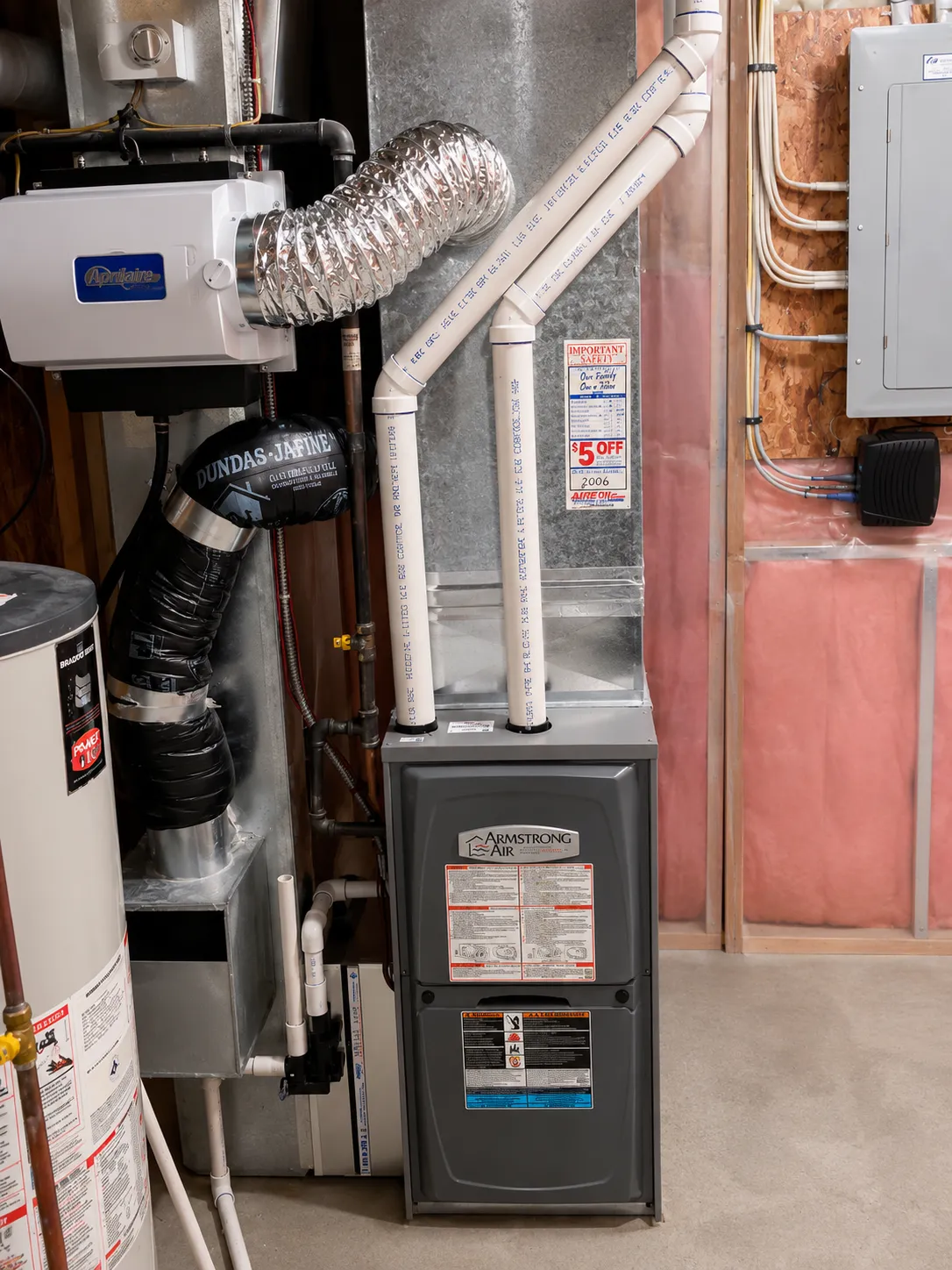
Any furnace above roughly 90% AFUE is a condensing furnace, and that word has consequences. It extracts so much heat from the exhaust that water condenses out of it, and the flue gas leaves too cool to rise up a masonry chimney on its own. So it vents horizontally through a wall in plastic pipe, driven by a fan, and it needs somewhere for the condensate to drain.
Which means replacing a mid-efficiency furnace with a high-efficiency one is not a swap of one box for another. New penetrations through the wall, with clearances from windows, doors, and the property line. A drain, and a plan for it if the furnace sits somewhere that can freeze.
None of that is guesswork on the day. It is what the visit before the quote is for: measuring the house, looking at where the venting can go, the clearances it has to keep, and what the existing water heater and ductwork mean for the job. A quote written without that visit is a quote with surprises in it.
Replace now, or repair one more year
If the furnace still runs, choosing a new one is only half the question. Age, what the repair costs against a replacement, and whether it is a safety issue are what decide it, and a cracked heat exchanger decides it immediately regardless of age.
We set that out properly in repair or replace. If it has already quit and you are reading this at ten at night, start with what to check before you call instead, then furnace repair.
Six questions worth asking
Ask these of anyone quoting you, us included. The answers tell you more than the brand on the box.
- Did you measure the house, or quote from the size of the old furnace?
- What efficiency is this model, and does it need new venting to the outside?
- Is it single stage, two stage, or modulating, and why that one for my house?
- Where does the condensate drain, and what happens to it in an unheated space?
- Did someone come and look at the mechanical room before writing this price?
- Who pulls the permit, and when does the inspection happen?
Have someone measure the house
City Furnace Mechanical has been installing heating across the greater Edmonton area since 2003, with licensed journeyman technicians, permits pulled, and the work inspected. We size from the house rather than from the old label, and we will tell you plainly when a repair is the better call this year. See what the job involves on our furnace installation and replacement page, or compare system types on heating systems.
People also ask
What is the best furnace for an Edmonton home?
There is no single answer, because the furnace is only half of the decision. The same model that runs beautifully in a tight new build in Spruce Grove can short cycle badly in a 1950s bungalow with undersized ductwork. What makes a furnace the right one here is correct sizing for the heat loss of your house, efficiency that suits how long you plan to stay, and a staging and blower setup your ducts can actually handle.
Does a bigger furnace heat a house better?
No, and oversizing is one of the most common faults we find. A furnace that is too large satisfies the thermostat quickly and shuts off, then starts again a few minutes later. That short cycling wears the ignition and blower components, leaves the rooms furthest from the furnace cold because the blower never runs long enough to move heat there, and makes the house feel drafty. Sizing comes from a heat loss calculation on your house, not from the label on the old unit.
What does 96% AFUE actually mean?
AFUE is the share of the gas you pay for that ends up as heat in the house over a heating season. A 96% AFUE furnace turns 96 cents of every dollar of gas into heat. Older mid-efficiency units sit closer to 80%, which is why the upgrade is noticeable on a long Alberta winter. It is a seasonal average under test conditions, so treat it as a way to compare models rather than a promise about your bill.
Why does a high-efficiency furnace need new venting?
A furnace above roughly 90% AFUE is a condensing furnace. It pulls so much heat out of the exhaust that water condenses in it, and the flue gas comes out too cool to rise up a masonry chimney. So it vents sideways through a wall in plastic pipe and needs a drain for the condensate. Replacing a mid-efficiency furnace with one of these is not a straight swap: it changes where the exhaust leaves the building.
Does someone need to visit before quoting a furnace?
Yes, and it is the difference between a quote and a guess. The visit measures the house, checks where the new venting can run and what clearances it has to keep from windows and doors, and looks at the ductwork and the rest of the mechanical room. That is what makes the size correct and the price complete.
Do I need a permit to replace a furnace in Edmonton?
Yes. Furnace replacement in Edmonton is permitted work, and gas work must be done by a licensed gas fitter. We pull the permit and the work is inspected. If a quote you are comparing does not mention a permit, ask who is pulling it.