
Your Seasonal Furnace Maintenance Checklist
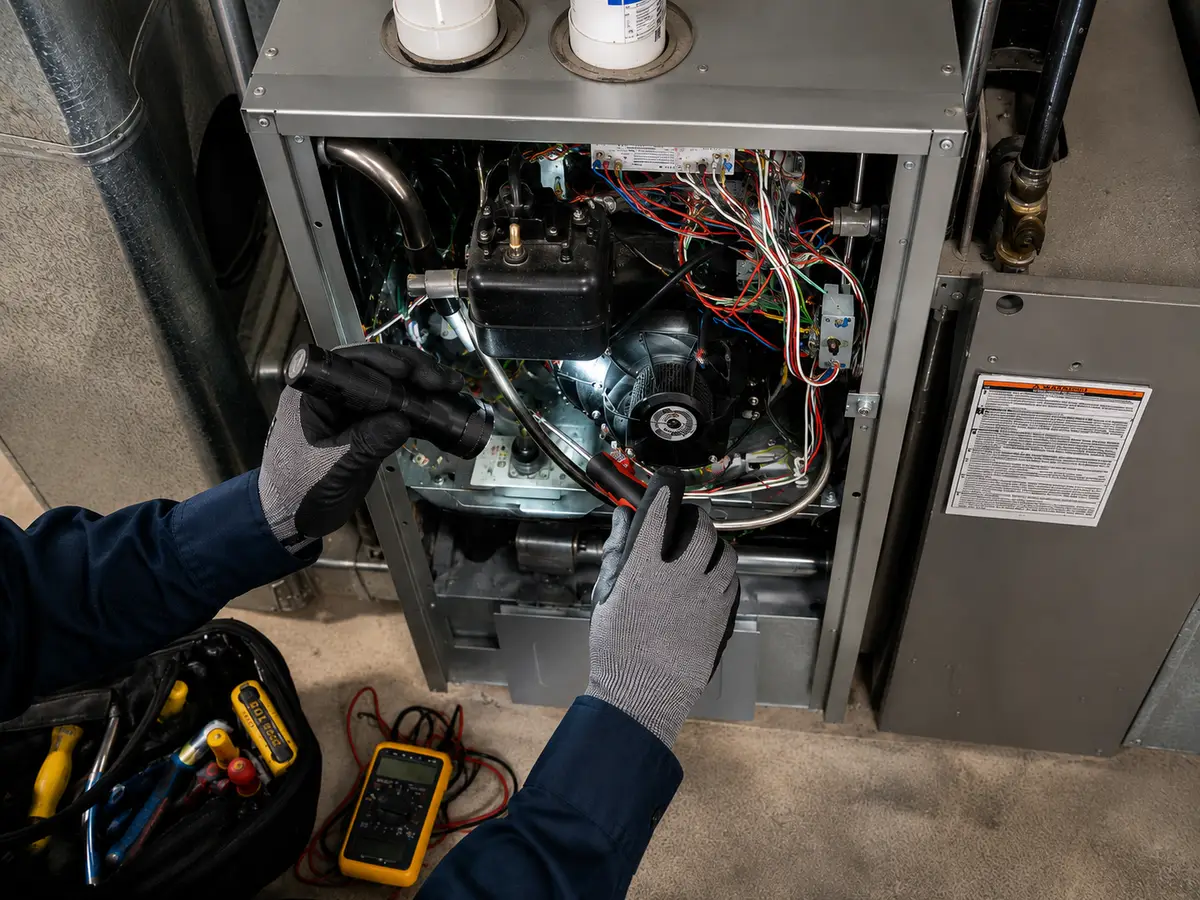
A furnace here works for eight months of the year, often through stretches where failing is not an inconvenience but a burst pipe waiting to happen.
Almost every no heat call we take in the middle of winter was preventable, and the warning signs were usually there in the fall. This is the checklist we would give a friend: what you can do yourself, what a technician does that you cannot, and the short list of things nobody should be poking at.
What you can do yourself
None of this needs a tool you do not already own, and together it takes about twenty minutes.
- Change or wash the filter, and note the size so the next one is easy to buy
- Clear at least a metre around the furnace, especially anything stored against it
- Open every supply vent and keep furniture and rugs off the returns
- Test the thermostat by calling for heat and confirming the burner fires
- Press the test button on every smoke and carbon monoxide alarm in the house
- Look outside at the intake and exhaust pipes and clear any nest, leaf or snow
Run the heat before you need it
On a mild day in September, turn the thermostat up until the furnace fires and let it run for a full cycle. You are listening for a clean start, a steady burn, and a shutdown without banging. A smell of dust burning off in the first few minutes is normal after a summer idle. A smell that persists, or any grinding, booming or repeated clicking without ignition, is not.
Finding that in September means booking a repair at your convenience. Finding it at minus thirty means finding it at two in the morning, along with everyone else in the city.
What a professional tune-up covers
This is the work that needs instruments and a licence, not enthusiasm:
- Inspect the heat exchanger for cracks, the failure that lets combustion gas into your air
- Clean the burners and check the flame pattern and ignition
- Test the flame sensor, pressure switch and limit controls
- Check the venting and the combustion air supply for obstruction and proper draw
- Measure gas pressure and combustion, and adjust to the manufacturer's specification
- Check the blower, motor amperage and belt where one is fitted
- Confirm the safety controls actually shut the unit down when they should
The heat exchanger inspection is the one that matters most. A cracked exchanger can let combustion gases, carbon monoxide among them, into the air your family breathes, and it does it without a sound or a smell. That is the reason this is an annual job rather than a when it breaks job.
What not to touch
Not because it is difficult, but because the way these fail involves gas and combustion:
- Anything behind the burner compartment door
- The gas valve, gas line or any fitting on it
- The heat exchanger, which needs proper inspection to judge
- Wiring inside the control board
The alarm you should not skip
Carbon monoxide has no colour and no smell, and the early symptoms of exposure, headache and tiredness, are easy to blame on a long week. A working alarm on every level of the house, tested when you change the filter, is the cheapest safety equipment you will ever buy. Detectors do expire, so check the date printed on the back while you are there.
Book it before the rush
City Furnace Mechanical has been servicing furnaces across the greater Edmonton area since 2003, with journeyman gas fitters and sheet metal mechanics doing the work. If your furnace is getting on in years and you are weighing another repair against replacing it, our guide on repairing or replacing a furnace lays out how we think about that. If it has already quit, start with furnace repair.
People also ask
How often should a furnace be serviced?
Once a year, ideally in late summer or early fall before the first cold snap. A furnace here runs hard for eight months, and an annual service is what keeps small faults from becoming a no heat call in January.
How often should I change my furnace filter?
For a standard one inch filter, every one to three months, and toward the shorter end if you have pets, allergies or ongoing renovation dust. Thicker media filters can run longer. The honest test is holding it up to a light: if you cannot see light through it, it is restricting your airflow.
Is a furnace tune-up actually worth it?
It buys three things. Safety, because the heat exchanger and venting get properly inspected. Reliability, because worn parts are caught before they strand you. And efficiency, because a furnace running at correct gas pressure with clean burners uses less gas for the same heat.
What can I do myself, and what should I leave alone?
Filters, vents, thermostat batteries, clearing space around the unit and checking your alarms are all fine. Anything involving gas, the burner compartment, the heat exchanger or the wiring belongs to a licensed technician. It is not about difficulty, it is that the failure modes involve combustion gas.
What if I smell gas near the furnace?
Do not touch any switch, do not use your phone indoors, get everyone out of the house, and call the gas emergency line from outside. Deal with the smell of gas first and the furnace afterward.