
Why Your AC Is Running But Not Cooling
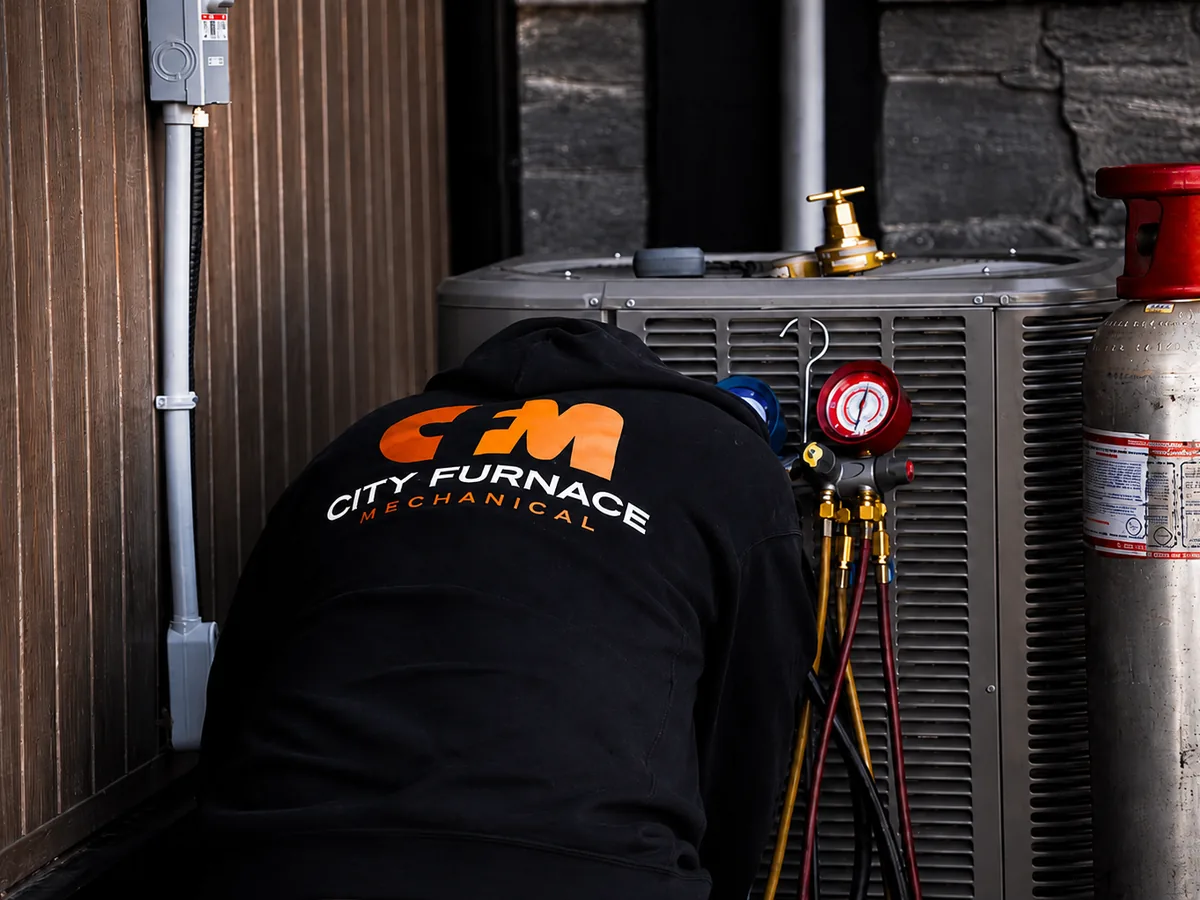
The unit is humming away outside, air is coming from the vents, and the house keeps getting warmer anyway.
It is one of the most common calls we get once the weather turns. The good news is that an air conditioner running without cooling is rarely a mystery. It is usually one of a handful of causes, and two of them you can check in about five minutes without touching anything you should not.
The five minute check
Before anything else, rule these out. More than a few service calls end with one of them.
- The thermostat is set to cool, and the target is below the room temperature
- The fan is set to auto rather than on, so it is not just moving warm air
- The filter is clean enough to see light through
- Every supply vent in the house is open, including the ones in rooms you do not use
- The outdoor unit is spinning, and nothing is leaning against it
A frozen coil, starved of air
An air conditioner needs a steady stream of warm air across its indoor coil. Choke that airflow with a clogged filter, closed vents or a blocked return, and the coil gets so cold that the moisture in the air freezes onto it. Once a layer of ice forms, even less air gets through, which makes more ice. The system runs harder and cools less with every passing hour.
The tell is ice on the copper lines where they meet the indoor unit, or water on the floor once it starts to melt. If you find it, switch the cooling off at the thermostat but leave the fan running. That moves room temperature air over the coil and thaws it gently, which usually takes a few hours. Then change the filter before you turn cooling back on, because running it again on the same restriction just rebuilds the ice.
If it freezes up again after a clean filter, stop there. At that point the cause is not airflow, and continuing to run it puts the compressor at risk.
Low refrigerant means a leak
Here is something worth knowing before anyone quotes you a recharge: an air conditioner does not use refrigerant up. It is a sealed loop. If the charge is low, refrigerant has escaped somewhere, and adding more without finding that leak means you will be making the same call next summer, paying for the same gas twice.
Low charge shows up as weak cooling, longer and longer run times, sometimes ice, and occasionally a faint hiss near the indoor unit. Handling refrigerant is regulated work in Canada for good reason, so this one is not a homeowner job. The fix is to locate the leak, repair it, then recharge to the manufacturer’s specification.
The outdoor unit cannot breathe
The unit outside has one job: dump the heat it collected indoors into the outside air. It does that through thin metal fins, and those fins are very good at catching grass clippings, dust, and the cottonwood fluff that coats everything here in early summer. Pack them solid and the heat has nowhere to go, so cooling drops off and the compressor runs hot.
Keep about half a metre clear on every side, and keep shrubs and fences from boxing it in. You can rinse loose debris off the outside of the fins with a garden hose on gentle pressure, with the power off at the disconnect. What you should not do is take a pressure washer to it. Those fins bend under far less force than people expect, and bent fins choke airflow just as effectively as dirt.
When to stop and pick up the phone
Any of these means the problem is past what a filter change will fix, and running the system anyway risks turning a repair into a replacement:
- Ice on the copper lines or the indoor coil that keeps coming back
- A hissing or bubbling sound near the indoor unit
- The outdoor fan is spinning but the compressor never starts
- The breaker trips again after you reset it once
- Water pooling around the furnace or air handler
Not cooling and the heat is on
City Furnace Mechanical has been repairing and installing residential cooling across the greater Edmonton area since 2003. We diagnose the actual cause before quoting a repair, and if a system is near the end of its life we will tell you that plainly rather than sell you a fix that buys one more season. See what is involved on our air conditioning page.
People also ask
Why is my AC running constantly but not cooling?
The most common reason is restricted airflow, usually a dirty filter or blocked vents, which lets the indoor coil freeze into a block of ice. Ice blocks the air, so the system runs and runs without cooling anything. Low refrigerant from a leak and a failing compressor are the other frequent causes.
Should I add refrigerant to my air conditioner?
An air conditioner does not consume refrigerant. It is a sealed system, so if the charge is low there is a leak somewhere. Topping it up without finding that leak means paying for the same repair again next season, and venting refrigerant is regulated in Canada. The leak needs to be found and fixed.
How long does it take a frozen AC coil to thaw?
Usually two to four hours with the cooling off and the fan running, sometimes longer on a badly iced coil. Never chip at the ice or aim a heat source at it. Once it thaws, change the filter before you run cooling again, or it will simply freeze back up.
Why is my AC blowing warm air on the hottest days?
Extreme heat exposes a system that was already marginal. A coil caked in dust, a condenser packed with cottonwood fluff, or a charge that is slightly low will all cope in mild weather and fall short when it matters. That is why a check in spring is worth more than a call in August.
Can a dirty outdoor unit stop my AC from cooling?
Yes. The outdoor coil is how the system dumps heat outside. When the fins pack with grass clippings, dust or seed fluff, the heat has nowhere to go, cooling capacity drops and the compressor runs hot. Keeping half a metre clear around the unit makes a real difference.